Peptide Overview
e
@eduardotnch464
October 18, 2026 · 4 min read
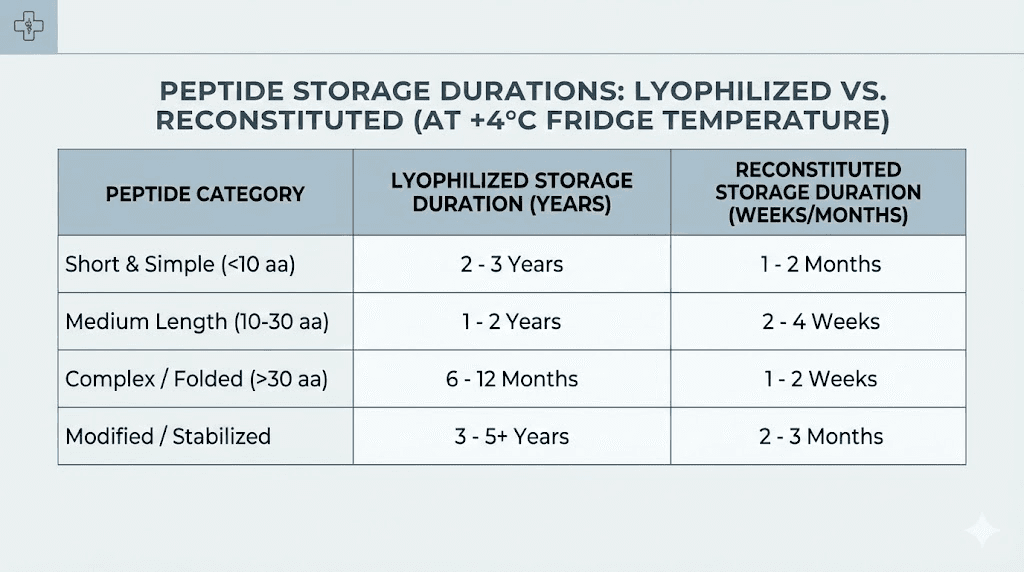
Peptide Guide Once a peptide has actually been reconstituted, cooled storage space is generally dealt with as the common best practice because water introduction minimizes stability. It is vital to minimize light exposure even during handling and reconstitution procedures. Stay clear of bright fluorescent lab lights that can cause peptide malfunction before your tests have actually even started, and instead operate in locations with inadequate illumination. Shop lyophilised peptides at minus 20 ° C for long term storage space or 2 to 8 ° C for short term storage space. Consequently, both the time and temperature level needed to attain completehydrolysis can be peptide-specific. A comparison of the peptide concentrations obtained fromeach amino acid kept track of can be a beneficial means to recognize troubles with hydrolysiscompleteness. Unfortunately, the quality and uniformity of peptides acquired fromcommercial sources vary commonly. According to Verified Peptides, making use of impermeable, inert-gas-flushed glass or dark containers with desiccants considerably mitigates wetness and oxidative dangers. The service life of peptide powder depends upon the storage problems. As a whole, lyophilized peptide powder can be saved at -20 ° C for concerning 1 year and at -80 ° C for regarding 3 years. They must beadded to the samples and calibrants at the start of the example prep work; accuracy of the quantity of the sample taken Cold Storage for the evaluation must be ensured, andreplicate analysis of the measurand is favored. To ensure coelution of the targetswith the matching inner standards during chromatographic separation, deuterated interior requirements need to be avoided (53 ). Forbiomolecule metrology, calibrators with accurate focus are frequentlyprepared by gravimetric approaches [if analyte standards are Check out this site available insufficient quantity and of recognized purity (43)] Before starting, allow both the peptide vial and solvent to reach space temperature level. Reconstituted peptides can tolerate 4-- 6 hours outside refrigeration if kept cool. Stay with your regular drug routine as much as possible while traveling.
What negates peptides?
Salicylic acid''s scrubing activity may destabilize the peptides, diminishing their skin-repairing benefits. Suggestion: To avoid any communication, use salicylic acid and peptide products at various times. For instance, include salicylic acid in your morning regimen and peptides in your night routine.
- Science-backed prepare for faster recuperation, muscle development, anti-aging, fat loss, and a lot more.
- Their tiny diameter just does not reduce rubber as properly as larger needles.
- If you would love to preserve peptides for a long period of time, usually greater than six months then Freezing at -20 ° C( -4 ° F)or listed below is ideal [2]
- Correct peptide storage matters due to the fact that temperature level, moisture, light direct exposure, freeze-thaw biking, and dealing with consistency can all influence security in time.
- When keeping peptides at area temperature, care ought to be taken to prevent the impact of moisture and light, and try to use them momentarily or return to low-temperature storage asap.
Staying Clear Of Usual Solubilization Mistakes
While analytical testing offers clear-cut quality analysis, visual assessment catches obvious troubles before you invest time in reconstitution. Reputable producers examine their products and file outcomes. Distributors who can not or will not offer analytical data must be prevented. You can adhere to every procedure flawlessly and still get poor results if your starting material is substandard.Light & Tag Protection
Many reconstituted peptides preserve acceptable security for 3-8 weeks at fridge temperature levels (2-8 ° C )when prepared with bacteriostatic water. Certain substances differ, with some enduring much shorter or longer periods. Inspect maker suggestions and examine solutions regularly for signs of deterioration including cloudiness, shade modifications, or unusual odors. The prolonged security and lowered contamination risk far surpass the very little expense difference. Never ever make use of faucet water, distilled water, or any kind of non-pharmaceutical-grade option. Each withdrawal from a peptide vial calls for a fresh, clean and sterile syringe. You'll require 2 unique syringe kinds for peptide work. The first, larger syringe handles reconstitution jobs. A 3mL Luer-Lock syringe with an 18-gauge or 23-gauge needle efficiently draws bacteriostatic water from its container.Travel Storage (air, Cruise, Cars And Truck)
Always save your peptides in nontransparent or amber vials or containers to shield them from the dangerous effects of light direct exposure [3] These particular containers are made to avoid destructive UV rays from destroying your priceless samples. Think of the vials' capacity to block light and suitability for your specific peptide samples while picking them. If you would love to preserve peptides for a long period of time, generally greater than 6 months then Freezing at -20 ° C( -4 ° F)or below is proper [2] Care needs to be taken, however, with the number of freeze-thaw cycles because the direct exposure to ice crystals may interfere with the vulnerable peptide structure. To minimize this risk, take into consideration splitting your peptide examples right into smaller sized aliquots prior to cold, just defrosting each time the amount you need per experiment.